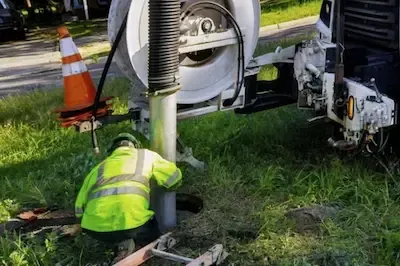
Hamilton Road Corridor Sewer Backups in Gahanna OH
The Hamilton Road corridor in Gahanna, Ohio runs through one of the city's most developed stretches — a blend of commercial properties, older residential neighborhoods, and newer infill development that has placed ongoing demand on the sewer infrastructure beneath it. Homeowners and business owners in this corridor report sewer backup problems at a higher rate than many other areas of Gahanna, and there are practical reasons for that. Understanding what drives these issues along this specific route can help you spot warning signs early and avoid a costly emergency.
Why the Hamilton Road Corridor Sees More Sewer Problems
The sewer lines running beneath and near Hamilton Road range significantly in age. Some sections trace back to infrastructure installed decades ago when Gahanna was far less developed. As the corridor grew — adding strip plazas, medical offices, restaurants, and residential density — the demand placed on those older lines increased without always triggering proportional upgrades. Cast iron and clay tile pipes that were installed in earlier development phases are now well past their expected service life, and the stress shows.
In addition to age, the Hamilton Road corridor crosses several drainage basins and elevation shifts that affect how wastewater flows. Lines that run through low-lying sections are more vulnerable to infiltration during heavy rainfall events — a common occurrence given central Ohio's spring weather patterns. When stormwater infiltrates the sanitary sewer system, it overwhelms flow capacity and pushes sewage backward into homes and businesses at the lowest connected points.
Tree Root Intrusion Along the Corridor
One of the most consistent contributors to sewer backups in established Gahanna neighborhoods near Hamilton Road is tree root intrusion. The corridor and its surrounding streets are lined with mature trees — a feature that makes the area attractive but creates real infrastructure challenges underground. Oak, maple, and silver maple trees are particularly aggressive in their root spread, and older clay tile pipe joints are especially vulnerable.
Tree roots follow moisture. Hairline cracks and imperfect joints in aging sewer lines release trace moisture into the surrounding soil, which roots detect and grow toward. Once a root penetrates even a small gap, it expands over time, eventually creating a partial or complete blockage. Homes within a few blocks of Hamilton Road — particularly in neighborhoods developed between the 1960s and 1980s — frequently deal with this exact problem on a recurring basis.
If you've had the same section of line cleared more than once in a two-year period, root intrusion is likely the underlying cause rather than a one-time blockage. Mechanical clearing provides temporary relief, but the root will return unless the pipe is repaired or relined.
Mixed-Use Development and Its Impact on Sewer Load
The commercial density along Hamilton Road between Morse Road and the I-270 interchange means that residential lateral lines often connect to shared infrastructure that also handles commercial flow. Grease accumulation from food service businesses, high-volume discharge from car washes and laundromats, and fluctuating flow from medical facilities all contribute to conditions that accelerate wear on shared lines.
For homeowners in nearby neighborhoods — including areas off Stygler Road, New Albany Road West, and the residential streets east of Hamilton Road — the condition of the main corridor infrastructure directly affects whether their lateral lines drain properly. A partial obstruction in a shared main line can create backpressure that reaches residential connections, causing backups in floor drains, basement fixtures, or first-floor bathrooms even when the homeowner's own lateral appears clean.
Warning Signs Specific to This Corridor
Sewer backup warning signs are consistent regardless of location, but certain patterns appear more frequently in this corridor. Watch for the following:
- Slow drains in multiple fixtures at the same time, particularly in lower-level bathrooms or utility sinks
- Gurgling sounds from floor drains or toilets when other fixtures are in use
- Water backing up into the tub or shower when the toilet is flushed
- Sewage odors in the basement or near floor-level drains
- Unusually lush or soft patches of grass over the buried lateral line in the yard
Any one of these signs warrants prompt attention. Multiple signs appearing together suggest the blockage or damage is significant. Waiting tends to convert a manageable repair into an emergency cleanup situation.
Corridor-Specific Soil and Ground Movement Factors
Central Ohio soils — including those throughout Gahanna — contain notable clay content. Clay soil expands when wet and contracts when dry, a cycle that puts physical stress on buried pipe joints over time. Along Hamilton Road, where heavy truck traffic and commercial vehicle loads contribute surface vibration, this soil movement is compounded. Pipe joints that have shifted even slightly due to soil movement create points of vulnerability where roots enter, where sediment accumulates, and where backups eventually develop.
For properties adjacent to the corridor with long lateral runs from the structure to the main sewer connection, these joint separations can occur at multiple points, making the problem more complex than a simple blockage at one location.
What to Do If You're Experiencing Backups on or Near Hamilton Road
If you're dealing with recurring backups or have noticed early warning signs, camera inspection is the most efficient diagnostic step. A sewer scope will show exactly where a blockage or pipe defect is located, whether root intrusion is present, and whether the pipe structure is intact or compromised. This information determines whether a hydro-jetting service will resolve the issue or whether repair or relining is needed.
For area residents who want to understand their specific risk, it's worth knowing the age and material of your lateral line and the approximate depth at which it connects to the main. Older properties along the corridor are more likely to have clay tile laterals, which require different maintenance strategies than modern PVC pipe.
Our guide on what to know about sewer backups covers the broader patterns that affect Gahanna properties and can help you understand what options apply to your situation. For properties in the Hamilton Road corridor specifically, recurring backups are rarely a one-time anomaly — they reflect underlying infrastructure conditions that benefit from a proactive approach rather than reactive repairs after the damage is already done.
If you're ready to get a clear picture of what's happening in your line, Sewer Backup Repair services are available to Gahanna homeowners and commercial property owners throughout the corridor, with camera inspection available as a standalone diagnostic or as part of a full service call.
