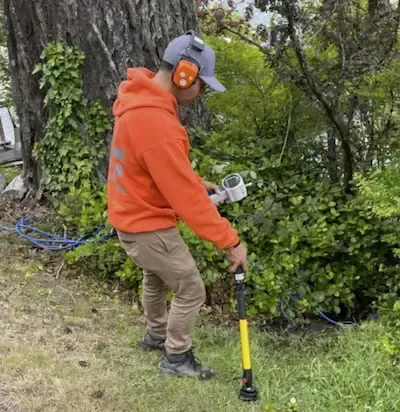
How to Find a Hidden Water Leak in Gahanna OH Homes
Finding a hidden water leak in a Gahanna, OH home starts with your water meter. Turn off every fixture and appliance that uses water, then watch the meter's leak indicator dial or digital display for movement. If it moves, water is escaping somewhere in your system. From there, you work through the home methodically — checking walls, floors, cabinets, and outdoor lines — to narrow down the source. This process does not require special tools for the early steps, though professional equipment may be needed to pinpoint leaks inside slabs or buried yard lines.
Step 1: Perform the Water Meter Shutoff Test
Go to your water meter, located near the street or at the front of your Gahanna property. Write down the current reading or photograph it. Turn off all water inside the house — faucets, toilets, the ice maker, the washing machine, and the water heater feed valve if it has one. Wait 15 to 30 minutes without using any water. Return to the meter. If the reading has changed or the small triangle indicator is spinning, you have an active leak somewhere on your side of the line. This confirms a problem before you spend time searching.
Step 2: Isolate Whether the Leak Is Inside or Outside
Locate the main shutoff valve inside your home, usually in the basement, utility room, or near the front wall. Close it. Go back to the meter and watch the indicator again. If the meter stops moving after you close the interior shutoff, the leak is inside the house. If it keeps moving with the interior valve closed, the leak is in the underground line running from the street to your foundation — a common issue on older Gahanna streets where ground shifts affect buried pipes. Knowing which zone the leak is in saves significant time and avoids unnecessary wall openings.
Step 3: Check High-Risk Indoor Locations First
Indoor leaks concentrate in predictable places. Work through these areas systematically:
- Under sinks: Open cabinet doors and look for moisture, staining, or soft flooring material at the base.
- Behind toilets: Check the supply line connection and the floor around the base for discoloration or soft spots.
- Water heater area: Look for mineral deposits, rust streaking, or pooling near the tank or pressure relief valve.
- Basement walls and floor: In Gahanna homes with older cast iron or galvanized supply lines, slow seeps often appear as white mineral staining on concrete or dark streaks on block walls.
- Ceilings below bathrooms: Water stains on drywall ceilings suggest a slow drain or supply leak from the floor above.
For Leak Detection that goes beyond visual inspection, a licensed plumber can use acoustic listening equipment or thermal imaging to confirm a leak location without opening walls.
Step 4: Listen for Active Leaks in Walls and Slabs
Turn off all noise sources — HVAC, appliances, fans — and move through the house quietly. Press your ear against interior walls near plumbing runs and listen for a faint hissing or trickling sound. Pay particular attention to walls adjacent to bathrooms, kitchens, and utility areas. In slab-foundation homes, which are common in parts of Gahanna built during the 1970s and 1980s expansion, you may hear a subtle hiss near baseboards or feel warm spots on the floor above a hot water slab leak. A hot water slab leak often shows as an inexplicably high gas or electric bill alongside elevated water costs.
Step 5: Inspect Outdoor Lines and Irrigation Systems
Walk the yard between the meter box and your foundation. Look for patches of grass that are noticeably greener or softer than surrounding areas, sinkholes or depressions, or muddy soil when the rest of the yard is dry. These are reliable indicators of a pressurized underground leak. If your property has an irrigation system — common in newer Gahanna neighborhoods near Creekside and Hamilton Road — test each zone individually and look for heads that bubble or spray sideways, which signals a cracked lateral line. Also check the backflow preventer assembly on irrigation systems for drips or cracks at the fittings.
Step 6: Review Your Water Bills for Confirmation
Pull three to six months of water bills from your Gahanna city utility account. A hidden leak typically shows a gradual or sudden increase in usage with no corresponding change in household behavior. The City of Gahanna utility department can sometimes flag unusual consumption on request. A confirmed usage spike alongside a positive meter test gives you clear evidence to present to a plumber and, if necessary, to your homeowner's insurance provider when evaluating whether a leak qualifies for coverage under a sudden and accidental loss clause.
Step 7: Call a Licensed Plumber for Pinpoint Location
Once you have narrowed the leak to a zone — indoor supply, slab, or outdoor line — a licensed Gahanna plumber can use non-invasive detection tools to identify the exact point before any cutting or excavation begins. Acoustic correlation equipment, pressurized nitrogen testing, and ground microphones can locate leaks within inches. This step is critical for slab leaks, where unnecessary jackhammering adds significant cost and disruption. You can learn more background on leak detection basics for homeowners to understand what the professional process involves and how to communicate findings to your plumber effectively.
