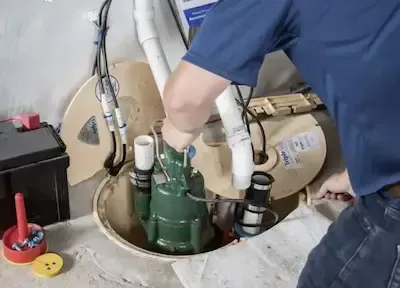
Fall Storm Sump Pump Failures Across Gahanna OH Homes
When fall storm systems move through central Ohio, sump pumps across Gahanna take on more water than they handle during the entire summer combined. The combination of saturated soil from cooling temperatures, heavy leaf debris clogging drainage lines, and sudden downpours creates the exact conditions that push aging or poorly maintained sump pumps past their limits. If your basement has stayed dry all year, that does not mean your pump is ready for what October and November bring to this part of Franklin County.
Why Fall Is the High-Risk Season for Sump Pumps in Gahanna
Most homeowners associate sump pump failures with spring thaw and April showers. That assumption leaves basements vulnerable in the fall. Autumn storm systems that track through the Columbus metro area often drop one to three inches of rain in a matter of hours, and the ground along Gahanna's creek corridors and flatter residential neighborhoods near Creekside Park absorbs that water differently in fall than in summer. Summer soil has evaporative pathways. Fall soil is already cold and compacted from months of temperature cycling, which means runoff moves faster and in larger volume toward your foundation.
Add to that the leaf accumulation clogging window wells, downspout extensions, and exterior drainage channels, and water has fewer escape routes. All of that load funnels into your sump pit, and the pump either handles it or it doesn't.
What Fails First During a Fall Storm Event
Understanding failure points helps you know what to inspect before storm season arrives. In Gahanna homes, the most common failure sequence during a heavy fall rain event looks like this:
- Float switch malfunction: The float switch tells the pump when to turn on. When it becomes coated in sediment or gets stuck in a tilted position, the pump either runs continuously and burns out its motor, or it fails to activate at all. This is the single most common failure point during high-volume rain events.
- Check valve failure: If your check valve is worn or improperly seated, water discharged by the pump flows back down into the pit the moment the pump cycles off. The pump restarts almost immediately and the cycle repeats until the motor overheats.
- Clogged discharge line: Fall debris, including leaves, dirt, and insects, works its way into exterior discharge openings. A partial clog forces the pump to work harder and can cause it to trip a breaker or burn out mid-storm.
- Power failure without battery backup: Fall storms frequently include lightning and wind events that knock out power across Gahanna neighborhoods, particularly in older sections near Clark State Road and along the Route 62 corridor. Without a battery backup unit, your pump goes silent exactly when it's needed most.
- Aged pump motor: Most residential sump pumps have a practical service life of seven to ten years. If your pump was installed before 2015 and has never been serviced, it is operating on borrowed time heading into another Ohio fall storm season.
How to Test Your Sump Pump Before October
Testing is straightforward and takes less than ten minutes. Start by locating the discharge pipe outside your home and confirming the outlet is clear of debris and positioned so water flows away from your foundation. Then go to your basement and remove the sump pit lid. The pit should be reasonably clean without excessive silt buildup or standing water that never drains.
Pour a five-gallon bucket of water slowly into the pit and watch what happens. The float should rise, trigger the pump within seconds, and the water should drain completely within a minute. The pump should then shut off cleanly when the float drops. If it hesitates to start, runs unusually loud, cycles on and off rapidly, or leaves water sitting in the pit, you have a problem worth addressing before fall storms arrive.
Also test your backup system if you have one. Unplug the primary pump and repeat the bucket test using only the battery backup unit. Many homeowners discover during an actual storm that their backup battery has been slowly discharging for months and no longer holds a useful charge.
For a deeper look at your system's overall condition, reviewing sump pump help for Gahanna basements will walk you through additional maintenance checkpoints specific to homes in this area.
Common Mistakes Gahanna Homeowners Make Before Fall
Waiting for a problem to show itself is the most expensive approach to sump pump maintenance. By the time water is on your basement floor, the pump has already failed and the damage has already started. Here are the mistakes that create that outcome:
- Assuming a pump that worked last year is still ready this year without any testing
- Running a pump with a discharge line that terminates too close to the foundation, which creates a recirculation problem during heavy rain
- Skipping the battery backup entirely and relying on a home generator that may not start automatically or may not be wired to the sump outlet
- Ignoring unusual pump sounds, particularly grinding or excessive humming, which indicate internal wear
- Leaving the sump pit uncovered, which allows debris and pests to accumulate and interfere with float operation
When to Call a Plumber Instead of Troubleshooting Yourself
Some sump pump issues are genuinely DIY-friendly. Clearing a clogged discharge outlet, replacing a float switch, or swapping a battery backup unit are manageable for a prepared homeowner. But if your pump motor shows signs of failure, if your discharge line runs through a finished wall and may be blocked internally, or if your pit fills faster than a functioning pump can empty it, those are situations where professional diagnosis protects your home from a much larger problem.
Homes in Gahanna with basements below the local water table near Big Walnut Creek tributaries are particularly vulnerable to volume surges during fall storms, and a pump that's undersized for the pit's intake rate will fail no matter how new it is. A plumber can assess whether your current pump's horsepower rating matches your actual drainage demand.
If you're unsure about your system's current condition or you've already noticed warning signs, Sump Pump Repair services are available locally to inspect, service, or replace your system before the first major fall storm arrives.
Getting Your Basement Ready for the Ohio Fall Rain Season
A basement that stays dry through fall storms in Gahanna is not the result of luck. It reflects a pump that has been tested, a discharge line that is clear and properly routed, a battery backup that holds a real charge, and a homeowner who didn't wait until water was already on the floor to start paying attention. Take an hour this September to run through your system. The cost of a service call now is a fraction of what water damage cleanup costs after a storm that your pump wasn't ready for.
